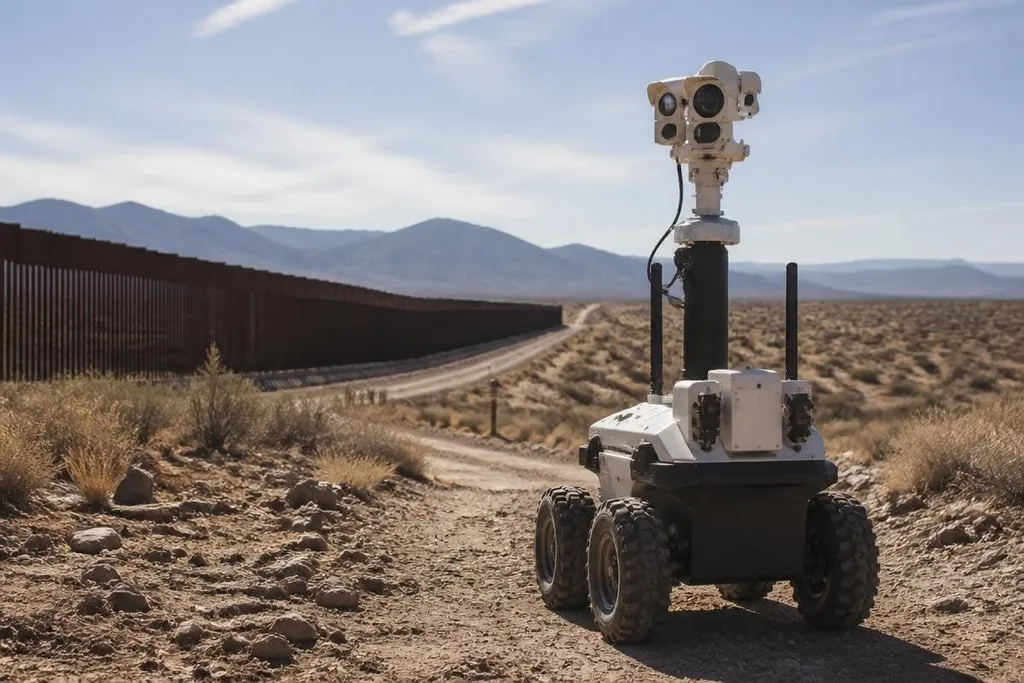
A border robot can watch a route, detect movement, carry supplies, or send an alert without a person standing nearby. The hard question is not only what the machine can do, but what happens to people when its judgment affects a search, detention, refusal of entry, or use of force.
- A sensor error can become a human rights problem when an officer acts on it.
- Remote control does not remove responsibility from the agency using the robot.
- Clear limits, records, and human review should come before wider deployment.
Where the risk starts
Robots gather information through cameras, thermal sensors, radar, microphones, and location systems. Each tool can change how a border agency sees a person, and the data may reveal more than the agency first intended to collect.
A camera may record a face. A thermal sensor may show movement at night. A location record may reveal where a person travelled. The question for each system is narrow and practical: what data does it collect, for what task, and how long does the agency keep it?
A system that records everyone near a border can affect people who are not suspected of breaking a law. That creates a privacy issue before an officer speaks to anyone. People also need a way to learn that data exists and challenge a serious error, where the law allows it.
When detection becomes a decision
A robot may mark a person as suspicious because of movement, location, clothing, or a sensor reading. None of those signals proves intent. A person may be lost, seeking help, carrying a child, or moving away from danger.
The next step matters. An alert reviewed by a trained officer is one thing. An alert that triggers a stop, search, detention, or force without meaningful human review is another. The machine may shape the decision, but the agency still has to explain who made it and why.
This is where records matter. Agencies should keep the sensor input, the alert, the human response, and any later correction. Without that trail, a person may face the result of a machine error without a practical way to question it.
Force and human control
A camera-carrying border robot raises one set of concerns. A robot carrying a weapon or capable of physical restraint raises another. Distance can make action feel easier for the operator, while the person on the ground still faces the full result.
Human control needs a real meaning. A person clicking approval after a system has already selected a target may have little time or information to make a sound decision. Agencies should set rules for when an operator must stop, when a second person must review the action, and what the system cannot do on its own.
The same rules should cover failure. A robot can lose its network link, misread a heat source, or identify the wrong person. Safe behavior after a fault should be defined before the machine enters service, not written after an incident.
When a border robot flags a person, its record should show the sensor, operator, location, and rule behind that action. Robot24.com can tie those details to a named test or deployment before the next section asks who answers for the machine’s decision.
Accountability cannot sit with the machine
Calling a system autonomous does not give an agency a defense. Someone chose the machine, approved its operating area, set its limits, trained its staff, and decided how to respond to its alerts.
The public also needs basic answers. Which agency owns the data? Who can inspect the system? What outside body can review a complaint? Can a person get a correction when a record is wrong? If the supplier keeps the system’s logic secret, can officials still explain a decision to the person affected?
A contract should not hide responsibility. The public agency remains responsible for the effect of its tools, even when a private company supplies the hardware or software.
A practical check before deployment
Before a border agency puts a robot into service, its review should cover these points:
- Define the task: State the exact job, operating area, and actions the robot may take.
- Limit the data: Collect only what the task needs, set a deletion period, and restrict staff access.
- Keep human review: Require a trained person to assess alerts before a search, detention, or use of force.
- Plan for faults: Test lost links, bad sensor readings, poor visibility, and mistaken identity.
- Record each action: Store the alert, operator decision, system status, and later correction.
- Give people a remedy: Set a clear route for complaints, data access, and review of serious mistakes.
Used for observation or logistics, a border robot can support staff, but its use becomes a rights issue as soon as its output changes what happens to a person. I’d reject any deployment that cannot name the human decision-maker, the data limit, and the review process before the first patrol begins.
The unresolved test is simple: can the agency explain one disputed robot-assisted decision to the person affected, using records that still exist?